What Is Shamanic Healing? Meaning and What to Expect
By Team Shamans For Hire · · 8 min read
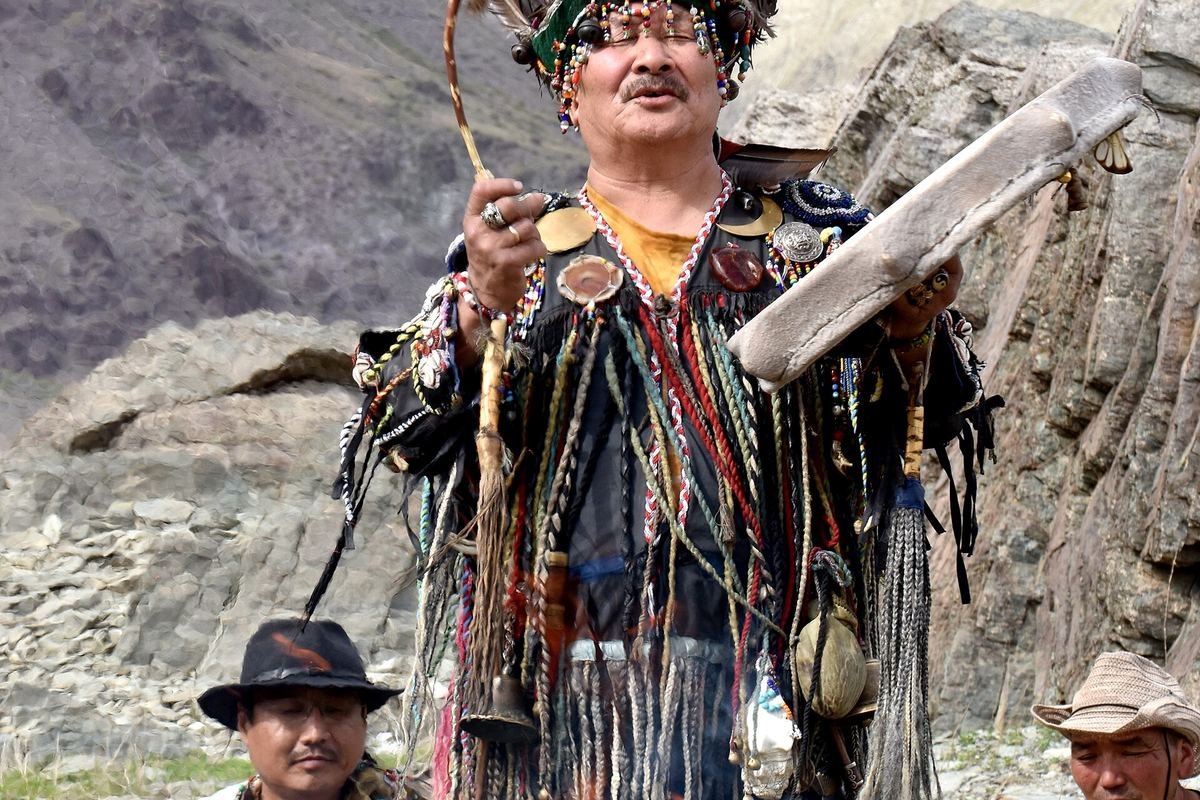
Short answer: shamanic healing is a broad name for the spiritual work that shamans and traditional practitioners do to restore a person's sense of balance, connection and wellbeing. It can include prayer, song, drumming, cleansing rituals, working with ancestors and spirit helpers, and the "journey" into non-ordinary reality described by many traditions. It is spiritual support. It does not diagnose, treat or cure illness, and it works best alongside, not instead of, medical and psychological care.
Where shamanic healing comes from
Across Siberia, the Arctic, the Americas, Africa and Asia, communities have had specialists who tended to the spiritual side of life. Anthropologists noticed common threads: an altered state of consciousness (often induced by rhythmic drumming), a relationship with helping spirits or ancestors, and a role in restoring harmony for individuals and the community. Encyclopaedia Britannica's entry on shamanism notes that healing is one of the shaman's central tasks in many societies.
In the 1980s the anthropologist Michael Harner popularised a cross-cultural approach he called "core shamanism" in The Way of the Shaman (1980). That is one modern strand. Many practitioners, however, work strictly within their own lineage, for example a Southern African sangoma trained through ukuthwasa, or an Andean curandero. It is worth asking any practitioner which approach they follow.
How shamanic traditions understand illness and wellbeing
Most shamanic worldviews see a person as part of a web of relationships: with family, ancestors, community, land and spirit. When those relationships are disturbed, a person may feel drained, unlucky, disconnected or "not themselves". Healing work tries to repair the relationship: honouring neglected ancestors, clearing heavy energy, recovering a lost part of the self (see soul retrieval explained), or bringing back guidance from the spirit world.
Common practices in a session
- Prayer and invocation. Opening a session by calling on ancestors, spirit helpers or the Creator, in the practitioner's own language and tradition.
- Drumming, rattling and song. A steady drum beat of around four to seven beats per second is used in many traditions to support the journey state.
- Cleansing. Smoke from herbs or resins, water, salt baths, or prayer to clear what feels heavy. In a distance session, the practitioner may describe a cleansing you can do yourself.
- Journeying. The practitioner enters a meditative state to seek guidance on your behalf, then reports what they experienced.
- Ancestral work. Guidance on how to honour and reconnect with ancestors, which is central in many African traditions.
- Integration advice. Simple, practical steps: rest, journaling, time in nature, reconciliation, or an offering.
What a distance session by phone is like
Many traditions hold that spiritual work is not limited by distance. On a phone session, your shaman will usually ask your first name and your intention, then open with prayer. You might be asked to sit or lie down, close your eyes and breathe slowly while they drum, pray or journey. Afterwards they share what came through and suggest something to carry into the coming days. Most people describe feeling calm, lighter or emotional; some simply value being deeply heard. On Shamans For Hire you choose the length and pay per connected minute. See shamanic healing by phone.
What does the research say?
Honest answer: rigorous research is limited. The U.S. National Center for Complementary and Integrative Health (NCCIH) notes that many complementary approaches have not been well studied, and that you should talk to your health care providers about any you use. Small studies have explored drumming and shamanic-style practices for stress and wellbeing, and researchers in medical anthropology have documented how traditional healers support meaning, community and emotional resilience. None of this shows that shamanic healing cures disease. We think the fairest way to describe it is as a spiritual and cultural practice that many people find meaningful.
Shamanic healing and medical care
A trustworthy practitioner will never ask you to stop taking medication, skip a doctor's appointment, or avoid therapy. Some countries formally recognise traditional practitioners alongside doctors: South Africa's Traditional Health Practitioners Act (Act 22 of 2007) set up a council to register them, and Kenya has long had a large community of traditional practitioners working beside clinics. In both places, collaboration with medical care is the healthy model. If you are in crisis, please contact emergency services or, in the US, call or text 988.
How to prepare for a healing session
- Choose a quiet, private space and a time you won't be rushed.
- Set a simple intention, such as "peace after a loss" or "clarity about my next step".
- Have water and a notebook nearby; drink water afterwards and rest if you can.
- Be honest about anything that matters, such as grief, recent changes or health conditions, so the practitioner can be appropriately gentle.
Red flags
Be careful with anyone who promises a cure, says you are cursed and must pay to lift it, pressures you to pay outside the platform, or asks for secrecy. Read how to choose a genuine shaman for a full checklist.
Readings or healing?
If you mainly want insight on a question, a shaman reading by phone may suit you better. Many of our practitioners offer both; for example, Mosibudi Molokomme works in Southern African traditional spirituality.
A short glossary of terms you may hear
- Journey: a meditative or trance state, often supported by drumming, in which the practitioner seeks guidance from the spirit world.
- Spirit helpers / power animals: allies that many traditions believe guide and protect a person or a practitioner.
- Extraction: in some traditions, removing heavy or intrusive energy that is believed not to belong to the person.
- Cleansing: clearing heaviness with water, smoke, herbs, salt or prayer.
Not every practitioner uses every practice. Asking "which of these do you do, and why?" is a good way to understand someone's lineage.
Frequently asked questions
Is shamanic healing a medical treatment?
No. It is spiritual support and guidance. It does not diagnose, treat or cure any condition and is not a substitute for medical or psychological care.
Can shamanic healing be done remotely?
Yes. Many traditions hold that spiritual work is not limited by distance, and distance sessions by phone are common.
How will I feel after a shamanic healing session?
Many people report feeling calm, lighter or emotional. Drink water, rest, and note anything that stands out over the following days.
Sources and further reading
- Encyclopaedia Britannica, "Shamanism"
- NCCIH, "Complementary, Alternative, or Integrative Health: What's In a Name?"
- South Africa, Traditional Health Practitioners Act 22 of 2007
- Michael Harner, The Way of the Shaman (Harper & Row, 1980)
Disclaimer: This article is for general information and spiritual interest. Readings and sessions on Shamans For Hire are spiritual guidance for reflection and entertainment purposes only, and are not a substitute for medical, psychological, legal or financial advice. 18+. In a crisis in the US, call or text 988. See our Entertainment Disclaimer and Our Standards.