Shamanism Traditions Around the World
By Team Shamans For Hire · · 8 min read
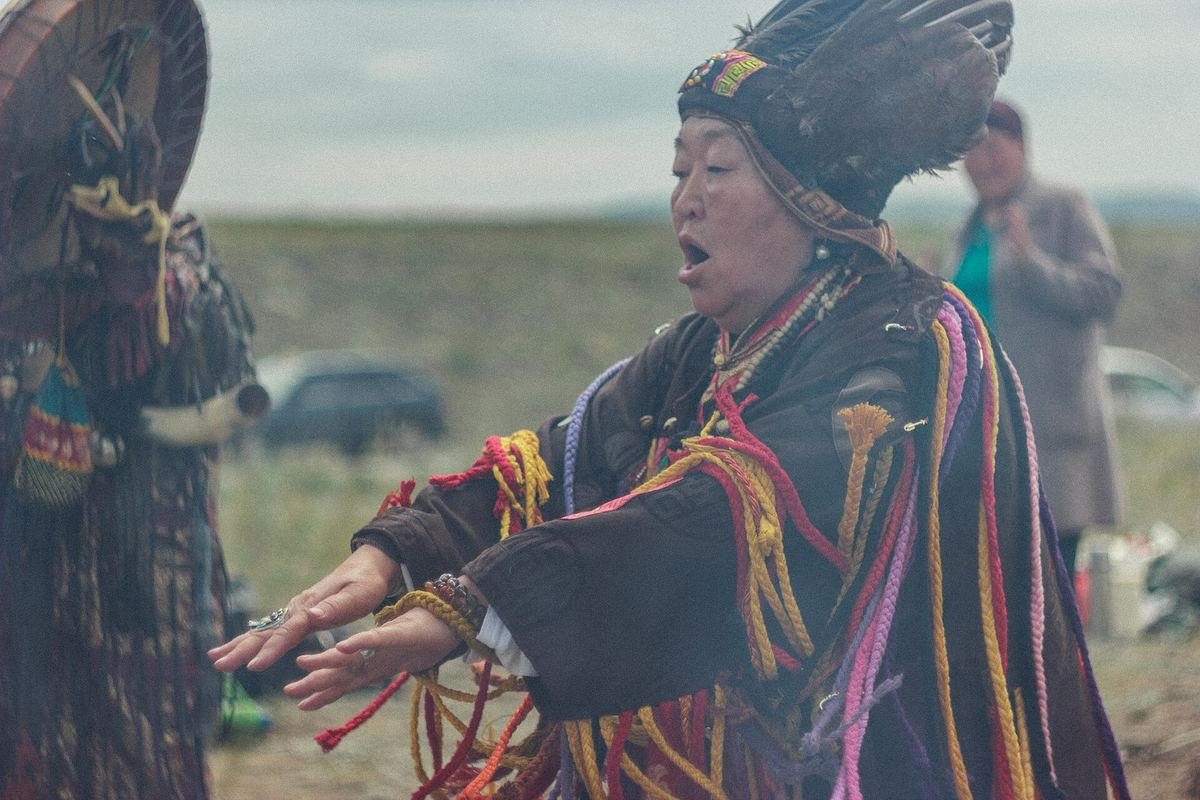
Short answer: the word shaman comes from the Evenki people of Siberia, but communities on every inhabited continent have spiritual specialists who pray, heal, divine and mediate with ancestors or spirits. Each tradition has its own name, training, tools and ethics. "Shamanism" is a useful umbrella term, but it's always most respectful to use the name a tradition uses for itself.
Siberia: where the word began
Among the Evenki and neighbouring peoples, the šaman was a community specialist who entered trance, often with a frame drum, to travel to the upper and lower worlds, find lost souls, guide the dead and seek the help of spirits. Russian and European travellers brought the word west in the 17th and 18th centuries. Soviet authorities persecuted shamans for decades; since the 1990s, practice has revived in places like Tuva and Buryatia.
Mongolia: the böö and udgan
Mongolian shamans (male böö, female udgan) honour Tengri, the Eternal Blue Sky, along with ancestral and nature spirits. Drums, mirrors and elaborate costumes are central. Mongolian shamanism has seen a strong revival since the end of socialism in 1990.
Korea: the mudang and the gut
In Korea, mostly female shamans called mudang perform the gut, a ceremony of music, dance and offerings to ancestors and spirits, for healing, good fortune or guiding the dead. Some gut rituals are recognised by South Korea as Important Intangible Cultural Heritage.
Northern Europe: the Sámi noaidi
The Sámi of Norway, Sweden, Finland and Russia had the noaidi, who used a decorated drum to enter trance and seek guidance. Many drums were confiscated or burned during Christian missions in the 17th and 18th centuries; a few survive in museums, and some have been returned to Sámi communities in recent years.
The Andes and Amazon: paqo, curandero and more
In the Peruvian Andes, Q'ero practitioners known as paqo make despacho offerings to Pachamama (Mother Earth) and the apus (mountain spirits). Across Latin America, curanderos blend Indigenous and Catholic practices to treat physical and spiritual ailments such as susto. Amazonian practitioners have specialised plant knowledge; plant-medicine ceremonies carry real health and legal risks and are outside the scope of phone sessions.
North America: a note of respect
Many Native American nations have healers and ceremonial leaders, but most do not use the word "shaman", and many object to their ceremonies being sold or imitated. The respectful approach is to learn from members of those nations directly and not to treat their practices as a generic "shamanism".
Southern Africa: sangoma and inyanga
In Zulu, Xhosa, Swazi, Ndebele and related cultures, the sangoma is a diviner called by the ancestors, often through dreams and illness, and trained over a long apprenticeship known as ukuthwasa. The inyanga traditionally specialises in herbal medicine. Sangomas often divine by throwing bones and shells. South Africa recognises traditional health practitioners in law. Learn more in our article on African ancestral guidance and dream interpretation, or meet Mosibudi Molokomme, who practises traditional spirituality from South Africa.
East and West Africa
In Kenya and Tanzania, the Swahili term mganga refers to a traditional healer; Kikuyu tradition speaks of the mundu mugo. In West Africa, the Yoruba babaláwo practises Ifá divination, which UNESCO inscribed on its list of the Intangible Cultural Heritage of Humanity in 2008.
Southeast Asia and Oceania
From the bomoh and dukun of Malaysia and Indonesia to the babaylan of the pre-colonial Philippines (often women and ritual leaders), many island cultures have specialists in healing and spirit work. In Hawai'i, the kahuna were experts in fields from healing to navigation.
Modern and core shamanism
In the late 20th century, Michael Harner's "core shamanism" distilled common elements, especially drum-supported journeying, into a practice open to people of any background. It is popular in Europe and North America. Critics argue it can strip practices from their cultures; supporters see it as a respectful, non-appropriative path because it doesn't claim any one tribe's ceremonies.
What these traditions share
- A relationship with ancestors, spirits and the land;
- altered states supported by drum, rattle, song or dance;
- healing seen as restoring balance in relationships;
- a calling, often through dreams or illness, followed by long training.
Finding a practitioner today
Many traditional practitioners now offer readings and healing at a distance. On Shamans For Hire, each profile names the shaman's tradition and region so you can choose the path that speaks to you. Start with shaman readings by phone or shamanic healing, and read how to choose a genuine shaman.
Tools of the trade: drums, bones and offerings
Across these traditions, a few kinds of tools appear again and again, each adapted to local materials and beliefs:
- Frame drums, used in Siberia, Mongolia and among the Sámi, are often seen as the shaman's "horse" or vehicle for the journey. Many are painted with maps of the spirit worlds.
- Divination sets: the bones, shells, seeds and small objects of Southern African sangomas; the palm nuts and divining chain (opele) of Yoruba Ifá; and coins, rice or cards elsewhere.
- Offerings: the Andean despacho bundle, food and drink for ancestors in Korea's gut, or snuff and water in many African households.
- Smoke and plants: juniper in Mongolia and Tibet, copal in Mesoamerica, and local herbs nearly everywhere.
Shamanism and the modern world
Traditions that were suppressed for generations are now openly practised again. In Mongolia and Siberia, shamans hold public ceremonies; Korean gut are staged as cultural heritage; UNESCO recognises Ifá; and South Africa has a statutory council for traditional health practitioners. At the same time, many communities face commercialisation and imitation. The respectful path for a seeker is to learn which tradition a practitioner comes from, to value lineage and training, and to support practitioners who represent their own culture honestly.
How to choose a tradition that suits you
You don't need to belong to a culture to ask one of its practitioners for guidance, but it helps to notice what draws you. People seeking ancestral connection are often drawn to African traditions; people seeking nature-based ceremony may feel at home with Andean or Siberian approaches. Read profiles, listen to how a practitioner describes their path, and trust your sense of who you feel comfortable talking to.
Frequently asked questions
Where does the word shaman come from?
From the Evenki (Tungus) language of Siberia, where šaman named a spiritual specialist who entered trance to mediate with spirits.
What is an African shaman called?
It depends on the culture: sangoma or inyanga in Southern Africa, mganga in East Africa, babaláwo in Yoruba tradition, among many others.
Is Ifá recognised by UNESCO?
Yes. The Ifa divination system was inscribed on UNESCO's Representative List of the Intangible Cultural Heritage of Humanity in 2008.
Sources and further reading
- Encyclopaedia Britannica, "Shamanism"
- UNESCO, "Ifa divination system"
- Mircea Eliade, Shamanism: Archaic Techniques of Ecstasy (Princeton University Press)
- Foundation for Shamanic Studies (Michael Harner, core shamanism)
Disclaimer: This article is for general information and spiritual interest. Readings and sessions on Shamans For Hire are spiritual guidance for reflection and entertainment purposes only, and are not a substitute for medical, psychological, legal or financial advice. 18+. In a crisis in the US, call or text 988. See our Entertainment Disclaimer and Our Standards.