African Ancestral Guidance and Dream Interpretation
By Team Shamans For Hire · · 7 min read
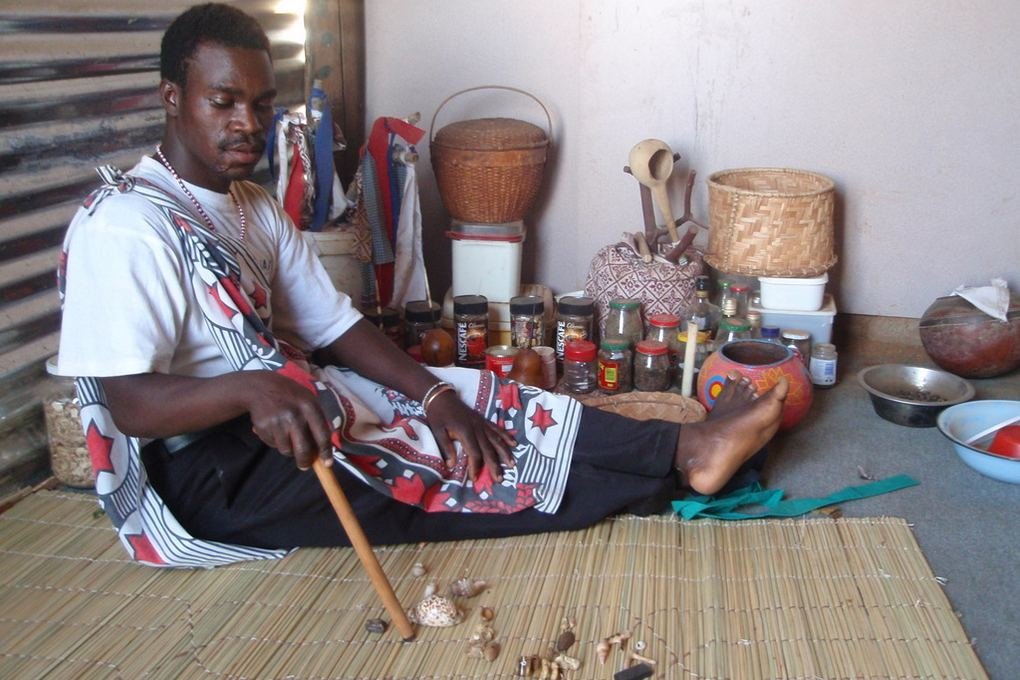
Short answer: across many African cultures, people who have died are understood to remain part of the family as ancestors, who can protect and guide the living. Dreams are one of the main ways ancestors are believed to communicate. Traditional practitioners, such as the sangoma of Southern Africa or the mganga of East Africa, are trained to interpret these messages and to recommend ways of restoring a good relationship with the ancestors.
Africa has thousands of cultures, so there is no single "African spirituality". What follows are widely shared themes, described with respect. A practitioner from a specific lineage will always know their own tradition best.
Who are the ancestors?
The Kenyan scholar John S. Mbiti, in African Religions and Philosophy (1969), described recently departed family members as the "living-dead": still remembered by name, still involved in family life, and acting as intermediaries between the living and the divine. In Zulu, they are amadlozi; in Xhosa, izinyanya. Honouring them is not "worship" in a Western sense so much as maintaining a relationship, much as you would with an elder.
Why dreams matter
In many traditions, dreams are a doorway through which ancestors visit. A grandmother appearing in a dream, a repeated image of water or a river, an animal that keeps returning: these can be taken as messages. In Southern Africa, the calling to become a sangoma (ukuthwasa) often begins with vivid, recurring dreams, along with illness or restlessness that doesn't respond to ordinary treatment. Training then takes place under an experienced teacher, sometimes for years.
How a practitioner interprets a dream
- Listening first. The practitioner asks for details: who appeared, what they wore or said, the setting, and how you felt on waking.
- Family context. They may ask about your lineage: who has passed, whether rituals were done when they died, and whether anyone has been "forgotten".
- Consulting the ancestors. Many sangomas throw ditaola or amathambo (divination bones, shells and other objects) and read the pattern; others receive insight through prayer or trance.
- Grounded advice. The answer is usually practical: visit a relative, perform a family ritual, make an offering, mend a quarrel, or simply say the ancestor's name with gratitude.
Common dream themes and how they are often read
Meanings vary by culture and individual, so treat these only as starting points for conversation:
- A deceased relative speaking to you: often taken as a direct message or a request to be remembered.
- Water, rivers or the sea: in some Southern African traditions associated with ancestral spirits and with a calling.
- Snakes: in several traditions linked with ancestors and not necessarily a bad sign.
- Being chased: often discussed as something unresolved that needs attention.
Simple, respectful ways to honour your ancestors
- Learn and say their names; ask older relatives for family stories.
- Keep a photo or a small space with a candle or a glass of water.
- Offer gratitude before important events.
- Keep a dream journal by your bed and note dreams as soon as you wake.
Specific rituals, such as offerings of snuff or traditional beer, or animal sacrifice in some communities, belong to particular cultures and should be done under the guidance of someone from that tradition.
Ancestral guidance by phone
Many practitioners now offer consultations at a distance. On a call, you'll describe your dream or question, the practitioner will consult in their own way, and you'll receive guidance you can act on. Mosibudi Molokomme, from South Africa, works in traditional spirituality on Shamans For Hire. See also shaman readings by phone and what happens in a reading.
A note on care and caution
Traditional practitioners are respected healers in their communities. South Africa formally recognises them under the Traditional Health Practitioners Act (Act 22 of 2007). As anywhere, though, there are imitators. Be wary of advertisements promising to return a lover in 24 hours, win the lottery, or "enlarge" anything, and of anyone demanding large sums to remove a curse. A genuine practitioner speaks humbly and gives practical advice. If disturbing dreams are affecting your sleep or mental health, please see a doctor as well.
How to keep a dream journal that's useful in a reading
Practitioners consistently say the most helpful thing a client can bring is a clear record of their dreams. A simple method:
- Keep a notebook or your phone's notes app beside your bed, and write as soon as you wake, before checking messages.
- Record who appeared (living or departed), the setting, colours, animals, objects and any words spoken.
- Write down how you felt in the dream and on waking. Feelings often matter more than plot.
- Note what was happening in your waking life that week, such as a decision, a conflict or an anniversary.
- Mark dreams that repeat. Recurring dreams are usually the first thing a practitioner asks about.
Kenya and East Africa: a note on tradition
East Africa has its own rich traditions. In Swahili, a traditional healer is a mganga (plural waganga). Among the Kikuyu, the mundu mugo was a respected healer and diviner, and among the Luo, ancestral spirits and dreams also carry great weight. In many Kenyan families, naming a child after a grandparent is understood to keep that ancestor's presence alive, and a dream of the namesake may be read as that ancestor watching over the child. Mbiti, who was born in Kenya, drew on these traditions when he wrote that the departed remain part of the family for as long as they are remembered by name.
When a dream is "just a dream"
Traditional practitioners do not treat every dream as a message. Many distinguish ordinary dreams, which reflect the day's worries, food or stress, from dreams that are especially vivid, recurring, or that feature a known ancestor clearly. A good reader helps you tell the difference rather than reading meaning into everything. Sleep science agrees that stress, medication and sleep deprivation strongly affect dreams, so if nightmares are frequent, a doctor's visit is a sensible step alongside spiritual guidance.
Frequently asked questions
What are ancestors in African spirituality?
Departed family members who are believed to remain part of the family, protecting and guiding the living and acting as intermediaries with the divine.
What is a sangoma?
A traditional healer and diviner in Southern Africa, often called through dreams and illness (ukuthwasa) and trained by an experienced teacher.
Can ancestors speak through dreams?
In many African traditions, dreams are considered one of the main ways ancestors communicate with the living.
Sources and further reading
- John S. Mbiti, African Religions and Philosophy (Heinemann, 1969)
- Encyclopaedia Britannica, "African religions: The role of ancestors"
- South Africa, Traditional Health Practitioners Act 22 of 2007
Disclaimer: This article is for general information and spiritual interest. Readings and sessions on Shamans For Hire are spiritual guidance for reflection and entertainment purposes only, and are not a substitute for medical, psychological, legal or financial advice. 18+. In a crisis in the US, call or text 988. See our Entertainment Disclaimer and Our Standards.